Anticipation is something you and I experience almost every day, even when we don’t realize it. It’s that feeling you get before an important event, exciting news, or even a difficult conversation. Maybe you’ve stayed awake thinking about tomorrow, counting down the hours until something happens. I know that feeling can be exciting, stressful, hopeful, or even confusing all at once.
In this article, I’ll help you understand what anticipation really means and why it has such a strong effect on your emotions and decisions.
You’ll also discover how anticipation shows up in daily life more often than you think. By the end, you may start noticing it in moments you never paid attention to before.
🗣️ Pronunciation Guide
Anticipation → an-tih-suh-PAY-shun (rhymes with “pay-shun”)
What Does Anticipation Really Mean?
Anticipation means the feeling of expecting something to happen in the future. It can be excitement, nervousness, or even worry. Simply put, it’s when your mind is already thinking about what’s coming next, before it actually happens.
Meaning & Definition
Anticipation is the act of looking forward to something that hasn’t happened yet. It can be:
- Positive → Excitement for a birthday, trip, or good news
- Negative → Anxiety before exams or an important meeting
👉 Example in chat:
- “I can’t sleep because of the anticipation of tomorrow!”
- “The anticipation is killing me… just tell me already!”
Anticipation Synonym
There are many words that can be used instead of anticipation depending on the context. Some common synonyms include:
- Expectation
- Excitement
- Hope
- Prediction
- Forecast
- Eagerness
- Suspense
- Awaiting
- Looking forward
For example:
- “She waited with anticipation”
can also be written as - “She waited with excitement.”
Using synonyms helps improve writing quality and avoids repeating the same word again and again.
Anticipation in a Sentence
Here are some simple and natural examples of anticipation used in sentences:
- The children waited in anticipation for the school trip.
- There was great anticipation before the cricket final started.
- He opened the gift with excitement and anticipation.
- The audience sat in anticipation of the singer’s arrival.
- She felt nervous anticipation before her interview.
These examples show how anticipation is commonly used in daily English conversations and writing.
Excited Anticipation Meaning
Excited anticipation means feeling happy, thrilled, and eager about something that is going to happen soon. It combines two emotions:
- Excitement
- Expectation
For example, a person may feel excited anticipation before:
- A wedding
- A concert
- A vacation
- Meeting someone special
- Launching a new business
Example sentence:
“She packed her bags with excited anticipation for her holiday.”
This phrase is often used to describe strong positive emotions about future events.
The Anticipation Is Real Meaning
“The anticipation is real” is a modern English expression used when someone is extremely excited or impatient about an upcoming event.
People usually say this when:
- Waiting for a movie release
- Counting down to a sports match
- Expecting exciting news
- Preparing for a celebration
Example:
“The anticipation is real for the new smartphone launch.”
The phrase simply means the excitement and eagerness are very strong and noticeable.
Anticipation Examples
Anticipation appears in many situations in everyday life. Here are some common examples:
Positive Anticipation
- Waiting for your birthday party
- Looking forward to Eid celebrations
- Expecting exam results after hard work
- Waiting for a loved one to arrive
Nervous Anticipation
- Before giving a speech
- Waiting for interview results
- Preparing for surgery
- Before a big competition
Romantic Anticipation
- Waiting for a first date
- Anticipating a marriage proposal
- Planning a surprise for someone special
These examples help explain how anticipation can involve different emotions depending on the situation.
Anticipation vs Expectation
Many people confuse anticipation and expectation because both relate to the future. However, they have slightly different meanings.
| Anticipation | Expectation |
| Emotional feeling about something that may happen | Belief that something will happen |
| Often connected with excitement or nervousness | More focused on certainty |
| Emotional and psychological | Logical and practical |
| Example: Waiting excitedly for a concert | Example: Expecting good service from a company |
Simple Difference
- Anticipation = emotional waiting
- Expectation = believing something will happen
Example:
“She felt anticipation before the concert because she was excited.”
“She had high expectations because the singer was famous.”
Understanding this difference can improve both spoken and written English.
Background & Origin
The word comes from the Latin word anticipation, which means “to take care of ahead of time.” Over the years, it became popular in English to describe both emotional and mental preparation for future events.
Today, it’s widely used in daily conversations, social media, and even psychology.
Usage in Different Contexts
💬 Casual Chats
- “The anticipation for this movie is real!”
📱 Social Media
- “Anticipation level: 100% 😭🔥”
💼 Professional
- “We anticipate growth in the coming quarter.”
🎮 Gaming
- “The anticipation before the final boss fight is intense!”
📊 Meanings Across Platforms
| Platform | Tone | Example |
| Emotional | “I’m full of anticipation 😭” | |
| Excited | “Anticipation for this drop 🔥” | |
| TikTok | Dramatic | “The anticipation tho 💀” |
| Snapchat | Personal | “So much anticipation rn” |
| Discord | Casual | “Anticipation before match!” |
😂 Real-Life Examples & Memes
- “Waiting for their reply like… pure anticipation mode ON 😭”
- “Anticipation is when you check your phone every 2 seconds 🤡”
🌍 Cultural or Regional Interpretations
- US/UK: Often used for both excitement and anxiety
- Asia (Pakistan, India, Philippines): Common in emotional and exam-related situations
- Australia: Used casually, often in a relaxed tone
📚 Other Meanings
| Field | Meaning | Description |
| Psychology | Emotional expectation | Feeling before an event |
| Business | Forecasting | Predicting future outcomes |
| Literature | Suspense | Building excitement in stories |
⚠️ Common Mistakes & Misconceptions
- Thinking anticipation is only excitement (it can be anxiety too)
- Using it only for big events (it works for small things too)
- Confusing it with “expectation” (slightly different tone)
- Overusing it in formal writing incorrectly
🧠 Psychological / Emotional Meaning
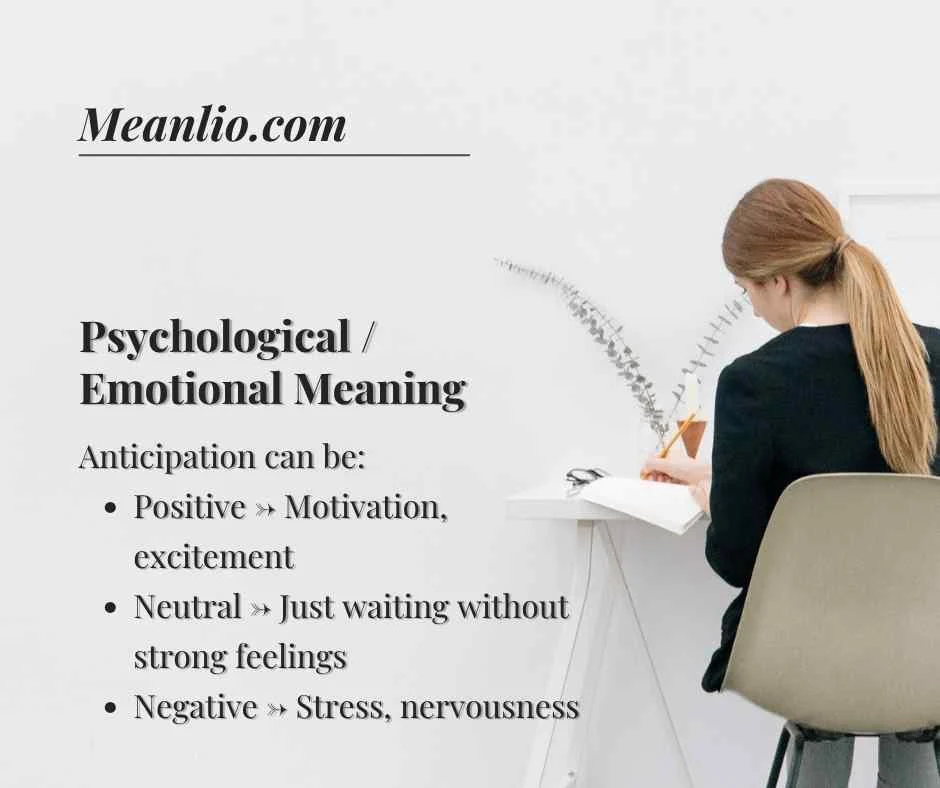
Anticipation can be:
- Positive → Motivation, excitement
- Neutral → Just waiting without strong feelings
- Negative → Stress, nervousness
That’s why sometimes it feels good… and other times, overwhelming.
🔄 Similar Terms & Alternatives
| Word | Meaning | Tone |
| Expectation | Belief something will happen | Neutral |
| Excitement | Happiness about future | Positive |
| Anxiety | Worry about future | Negative |
| Hope | Wish for good outcome | Positive |
😬 Is It Offensive or Friendly?
Anticipation is completely neutral and safe.
It’s not offensive at all.
But tone matters:
- “The anticipation is exciting!” → Positive
- “The anticipation is stressing me out” → Negative
🧩 Grammar or Linguistic Insight
“Anticipation” is a noun.
Verb form = anticipate
Example:
- “I anticipate good results.”
- “There is a lot of anticipation.”
It shows how English evolves to express feelings about the future.
💬 How to Respond
If someone says “I’m feeling anticipation,” you can reply:
- “Same! I can’t wait 😄”
- “What are you waiting for?”
- “Hope it turns out amazing!”
- “Don’t stress, it’ll be fine 😊”
- “The suspense is real!”
🔍 Differences From Similar Words
| Word | Difference |
| Anticipation | Feeling before something happens |
| Expectation | Belief something will happen |
| Excitement | Strong happiness only |
| Anxiety | Only worry or fear |
💖 Relevance in Dating & Online Culture
In texting and dating:
- Waiting for a reply = anticipation
- Before meeting someone = nervous anticipation
- “The anticipation is killing me” is super common
Gen Z often uses it dramatically for humor or exaggeration.
📈 Popularity & Trends
Anticipation is trending more on:
- TikTok captions
- Meme culture
- Emotional storytelling
People love expressing build-up feelings, and this word fits perfectly.
🚫 When NOT to Use Anticipation
Avoid using it in:
- Very formal/legal writing
- Situations needing exact predictions
- When you mean certainty (anticipation is not 100% sure)
👉 Example mistake:
❌ “We anticipate 100% guaranteed results”
🟦 One-Sentence Summary
Anticipation is the feeling of thinking about and emotionally reacting to something before it happens.
❓ FAQs
1. Is anticipation a good or bad feeling?
It can be both. It depends on the situation—excitement or anxiety.
2. What is an example of anticipation?
Waiting for exam results or a surprise party.
3. Is anticipation the same as expectation?
Not exactly. Anticipation is emotional, expectation is more logical.
4. Can anticipation cause stress?
Yes, especially if you’re worried about the outcome.
5. How do you use anticipation in a sentence?
“There was a lot of anticipation before the big announcement.”
✨ Conclusion
Anticipation is one of those feelings that quietly shapes our everyday life. From small moments like waiting for a text to big life events, it keeps us emotionally connected to the future.
Sometimes it’s exciting, sometimes stressful—but it always reminds us that something meaningful is coming.
So next time you feel that mix of nerves and excitement… now you know what to call it 😊

Michael Brooks is an educational writer for a meaning and explanation website that focuses on modern internet slang and chat abbreviations.
He explains texting terms in a simple and easy way for better understanding.
His content helps users quickly learn what common online words and slang mean.
This platform is designed for students, beginners, and English learners who want clear explanations of digital language.
Books:
- Digital Slang Dictionary: Modern Chat Meanings Explained
- Text Talk Basics: Understanding Internet Language
 Emma Johnson