
If you’ve ever come across the word “fetus” and wondered what it actually means, you’re not alone. I know medical terms can sometimes feel confusing, especially when they relate to pregnancy and human development.
In this article, I’ll break down the meaning of a fetus in the simplest way possible so you can easily understand it.
You’ll also learn how a fetus develops, when this stage begins, and how it differs from an embryo. If you’re curious about pregnancy, studying biology, or just searching for clear answers, you’re in the right place.
By the end, you’ll have a complete understanding of what the term “fetus” really means and why it matters.
🔊 Pronunciation Guide
Fetus → Sounds like “fee-tuhs” (rhymes with “see us”)
What does fetus mean?
A fetus is an unborn baby inside the womb, usually from about the 9th week of pregnancy until birth. At this stage, the baby has already started forming major body parts like arms, legs, and organs, and continues to grow and develop until delivery.
Meaning & Definition
The word “fetus” refers to a developing human inside the mother’s uterus after the early stage called the embryo.
- Primary meaning: An unborn baby from week 9 until birth
- Secondary meaning: A stage of human development where growth and organ formation continue
💬 Real Chat Examples:
- “The doctor said the fetus is healthy and growing well.”
- “At 20 weeks, the fetus can already move and respond.”
Does Fetus Mean Baby in Latin?
The word “fetus” comes from Latin, but it does not directly mean “baby.” In classical Latin, fetus referred to “offspring,” “bringing forth,” or “young one.” It was commonly used to describe the development or birth of living beings. Over time, the term became associated with unborn offspring during pregnancy.
Today, the English word “fetus” is mainly used in medical and biological contexts to describe the stage of development before birth. While many people use “baby” and “fetus” interchangeably in casual conversation, their meanings are slightly different in scientific language.
What Does Fetus Mean in English?
In English, a fetus is an unborn developing human or animal after the early stages of growth. In humans, the term is generally used from the end of the eighth week of pregnancy until birth.
A fetus develops inside the uterus and continues to grow organs, bones, muscles, and other body systems during pregnancy. The word is commonly used in healthcare, biology, and pregnancy-related discussions.
Simple English definition:
A fetus is a developing unborn baby inside the womb after the embryo stage.
What Does Fetus Mean in Medical Terms?
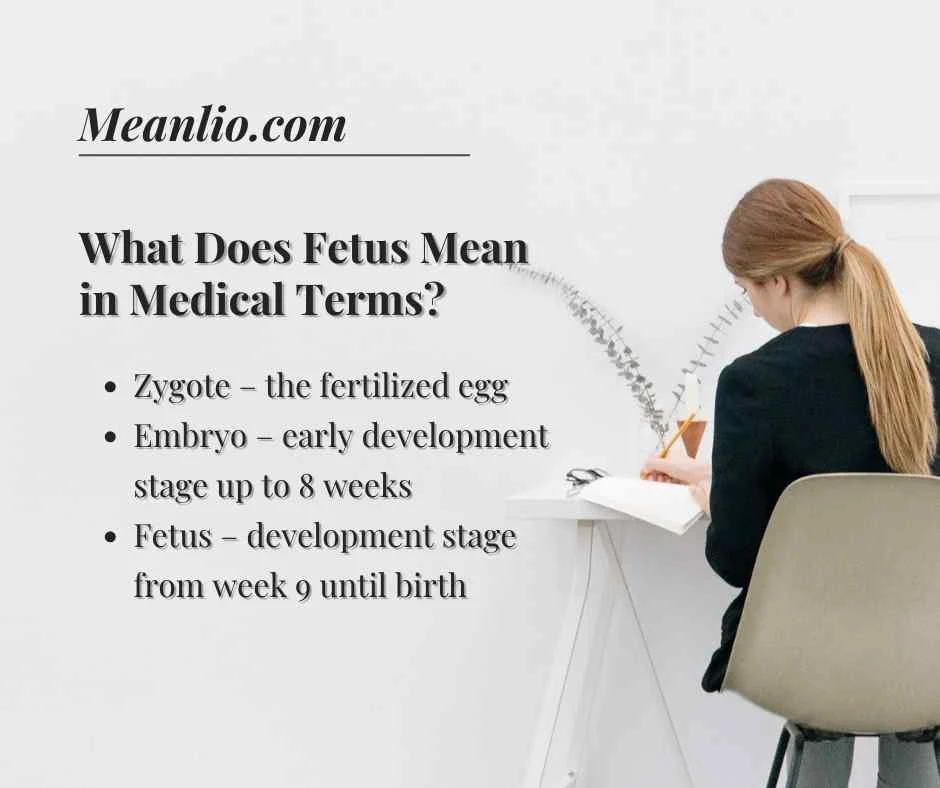
In medical terminology, a fetus is the stage of prenatal development that begins after the embryo phase. Doctors divide pregnancy into different stages:
- Zygote – the fertilized egg
- Embryo – early development stage up to 8 weeks
- Fetus – development stage from week 9 until birth
During the fetal stage, the body structures become more defined, and major organs continue to mature. Medical professionals use the term “fetus” because it provides a precise scientific description of human development during pregnancy.
Biology Definition of Fetus
According to biology, a fetus is:
An unborn vertebrate in the later stages of development after the embryonic phase.
In humans, this period lasts from approximately the ninth week of pregnancy until delivery.
What Does Fetus Mean in Greek?
Interestingly, the word “fetus” is not originally Greek. It comes from Latin. However, ancient Greek medical writings used different words to describe unborn offspring and pregnancy development.
Greek physicians such as Hippocrates and Aristotle discussed fetal development using Greek terms related to growth, birth, and offspring. Although modern medical science often uses Greek and Latin roots, “fetus” itself has Latin origins rather than Greek origins.
Fetus or Foetus Meaning – What Is the Difference?

Both “fetus” and “foetus” mean the same thing. The difference is mainly based on spelling style:
- Fetus – American English spelling
- Foetus – Traditional British English spelling
Modern medical publications increasingly prefer “fetus,” even in many English-speaking countries outside the United States. The meaning remains identical in both spellings.
Does Fetus Mean Little Human?
The term “fetus” does not literally translate to “little human.” However, biologically, a human fetus is a developing human organism before birth.
As pregnancy progresses, the fetus develops recognizable human features such as:
- Arms and legs
- Facial features
- Heartbeat
- Brain activity
- Fingers and toes
Because of these developments, many people informally describe a fetus as a tiny or developing human being. Scientifically, the word simply refers to a specific developmental stage before birth.
Fetus Original Meaning
The original Latin meaning of fetus included ideas connected to:
- Childbearing
- Bringing forth offspring
- Growth and development
- Young offspring
In ancient usage, the term was broader than its modern medical meaning. Over centuries, English adopted the word specifically for prenatal development in humans and animals.
Fetus Definition in Biology

In biology, a fetus is defined as:
The later developmental stage of an unborn organism following the embryo stage and before birth.
The fetal stage is important because rapid growth and organ development occur during this period. Scientists and healthcare professionals study fetal development to monitor health, growth patterns, and pregnancy progress.
Key Characteristics of a Fetus
A fetus typically shows:
- Developed internal organs
- Detectable heartbeat
- Skeletal growth
- Brain development
- Movement inside the womb
These features become more advanced throughout pregnancy until birth occurs.
Background & Origin
The word “fetus” comes from Latin, meaning “offspring” or “bringing forth life.”
It has been used in science and medicine for centuries to describe this specific stage of development. Over time, it became a common term in healthcare, education, and even everyday conversations.
Usage in Different Contexts
🗨️ Casual Chats
- “The fetus is kicking already!”
- “It’s amazing how fast the fetus grows.”
📱 Social Media
- “Week 18 update: baby (fetus) is the size of a mango 🥭”
🏥 Professional (Medical)
- “The fetus shows normal development for gestational age.”
🎮 Gaming / Informal Jokes
(Not common, but sometimes used humorously)
- “Bro just spawned like a fetus 😅”
Meanings Across Platforms
| Platform | Tone | Example |
| Informal | “The fetus is moving a lot today!” | |
| Emotional | “Watching my fetus grow week by week ❤️” | |
| TikTok | Fun/Trendy | “POV: your fetus kicks at 3AM 😭” |
| Snapchat | Casual | “Doctor said fetus is healthy 👍” |
| Discord | Mixed | “Biology class: learning about fetus stage” |
Real-Life Examples & Memes
- “That moment when the fetus kicks and you’re like 😳”
- “Fetus: kicks once
Mom: WHOA CALM DOWN CHAMP 😂”
These moments make the concept feel more real and relatable.
Cultural or Regional Interpretations
- US/UK: Mostly used in medical or educational contexts
- Asia (India, Pakistan, Philippines): Often used in hospitals and studies; people may prefer “baby” in daily talk
- Australia: Similar to US, used in healthcare and education
Other Meanings
| Field | Meaning | Description |
| Biology | Human development | Stage after embryo |
| Medicine | Clinical term | Used in pregnancy care |
| Zoology | Animal development | Used for unborn animals too |
Common Mistakes & Misconceptions
- Thinking fetus = embryo (they are different stages)
- Believing fetus means “newborn baby” (it doesn’t)
- Using it casually in emotional conversations (can sound too clinical)
- Assuming it’s only for humans (also used for animals)
Psychological / Emotional Meaning
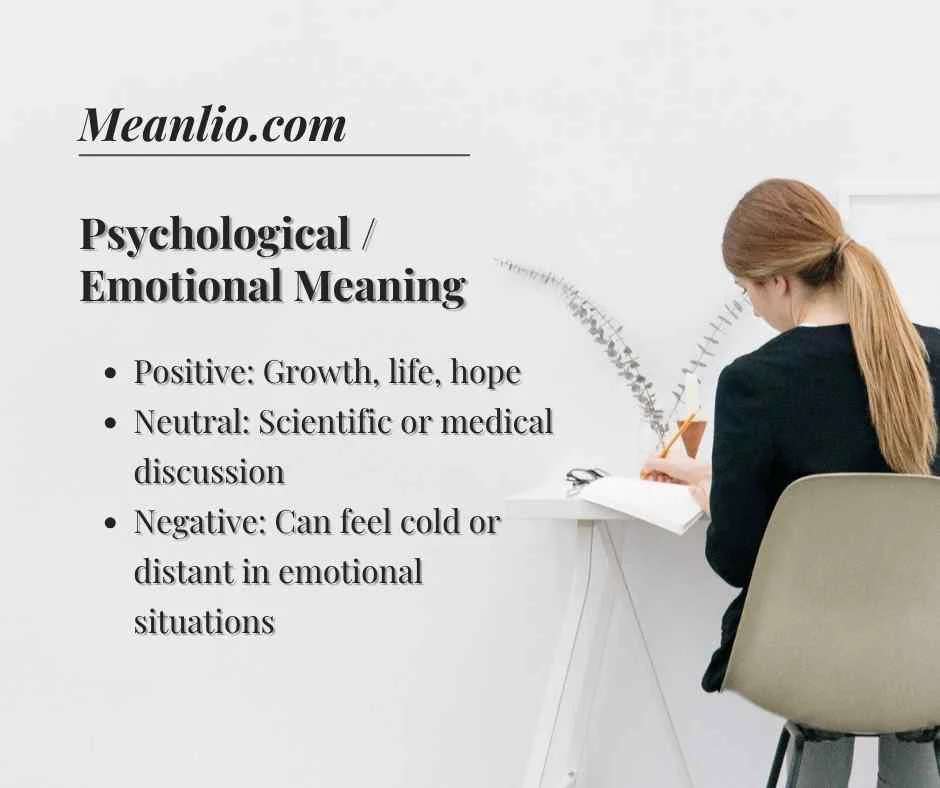
The word can feel different depending on context:
- Positive: Growth, life, hope
- Neutral: Scientific or medical discussion
- Negative: Can feel cold or distant in emotional situations
That’s why tone matters a lot.
Similar Terms & Alternatives
| Word | Meaning | Tone |
| Embryo | Earlier stage | Scientific |
| Baby | General term | Emotional |
| Unborn child | More personal | Warm |
Is It Offensive or Friendly?
“Fetus” is not offensive, but it can sound too clinical in emotional moments.
Example:
- Doctor: “The fetus is healthy.” ✅ (appropriate)
- Friend: “Your fetus is cute!” ❌ (sounds odd)
Grammar or Linguistic Insight
“Fetus” is a noun.
Plural: Fetuses (modern) or Fetii (rare, older form)
Language evolves, and today, “fetuses” is the commonly accepted form.
How to Respond
If someone uses the word “fetus,” here are natural replies:
- “That’s great news!”
- “Hope everything is going well ❤️”
- “So exciting, congrats!”
- “Wishing you a healthy pregnancy!”
- “That’s amazing to hear!”
Differences From Similar Words
| Word | Stage | Key Difference |
| Embryo | Weeks 1–8 | Early development |
| Fetus | Week 9–birth | Growth stage |
| Baby | After birth | Living outside womb |
Relevance in Dating & Online Culture
In modern chats (even on apps like Tinder), the word rarely appears unless discussing serious topics like family or future plans.
Gen Z usually prefers softer words like “baby” instead of “fetus” because it feels more emotional and less technical.
Popularity & Trends
On platforms like TikTok, pregnancy content is trending. People often track weekly fetus growth, comparing it to fruits or objects.
It’s become both educational and entertaining.
When NOT to Use Fetus
Avoid using this word in:
- Emotional conversations (use “baby” instead)
- Casual compliments (“Your fetus is cute” sounds weird)
- Romantic chats
- Non-medical situations where warmth matters
🧾 One-Sentence Summary
A fetus is an unborn baby developing in the womb from the 9th week of pregnancy until birth.
FAQs
1. Is a fetus the same as a baby?
Not exactly. A fetus is an unborn baby still inside the womb, while a baby is born and living outside.
2. When does an embryo become a fetus?
Around the 9th week of pregnancy, the embryo stage ends and it becomes a fetus.
3. Can a fetus feel movement?
Yes, as it grows, it starts moving, and the mother can feel kicks.
4. Is fetus a medical term only?
Mostly yes, but it’s also used in education and general discussions.
5. Is it okay to use the word fetus casually?
It’s better to use it in medical or educational contexts, not emotional ones.
Conclusion
Now you know exactly what “fetus” means and more importantly, how and when to use it.
It’s a simple word, but it represents one of the most beautiful stages of human life. From a tiny beginning to a fully formed baby, the journey is incredible.
If this helped you understand things better, share it with someone who might be confused too. Learning is always better together 💙

Emma Johnson is a modern writer who explores the meaning of everyday internet slang in a simple and engaging way.
She explains terms like “IMY,” “FR,” “sus,” “no cap,” and “bet” in a way that is easy for beginners to understand.
Her writing connects language, culture, and social media trends into fun and educational content.
She helps readers understand how Gen Z communication works in daily texting and online chats.
Her style is clear, friendly, and perfect for young readers and learners.
Books:
- Slang Dictionary for Beginners
- Text Talk: Modern Internet Language Guide
 Michael Brooks