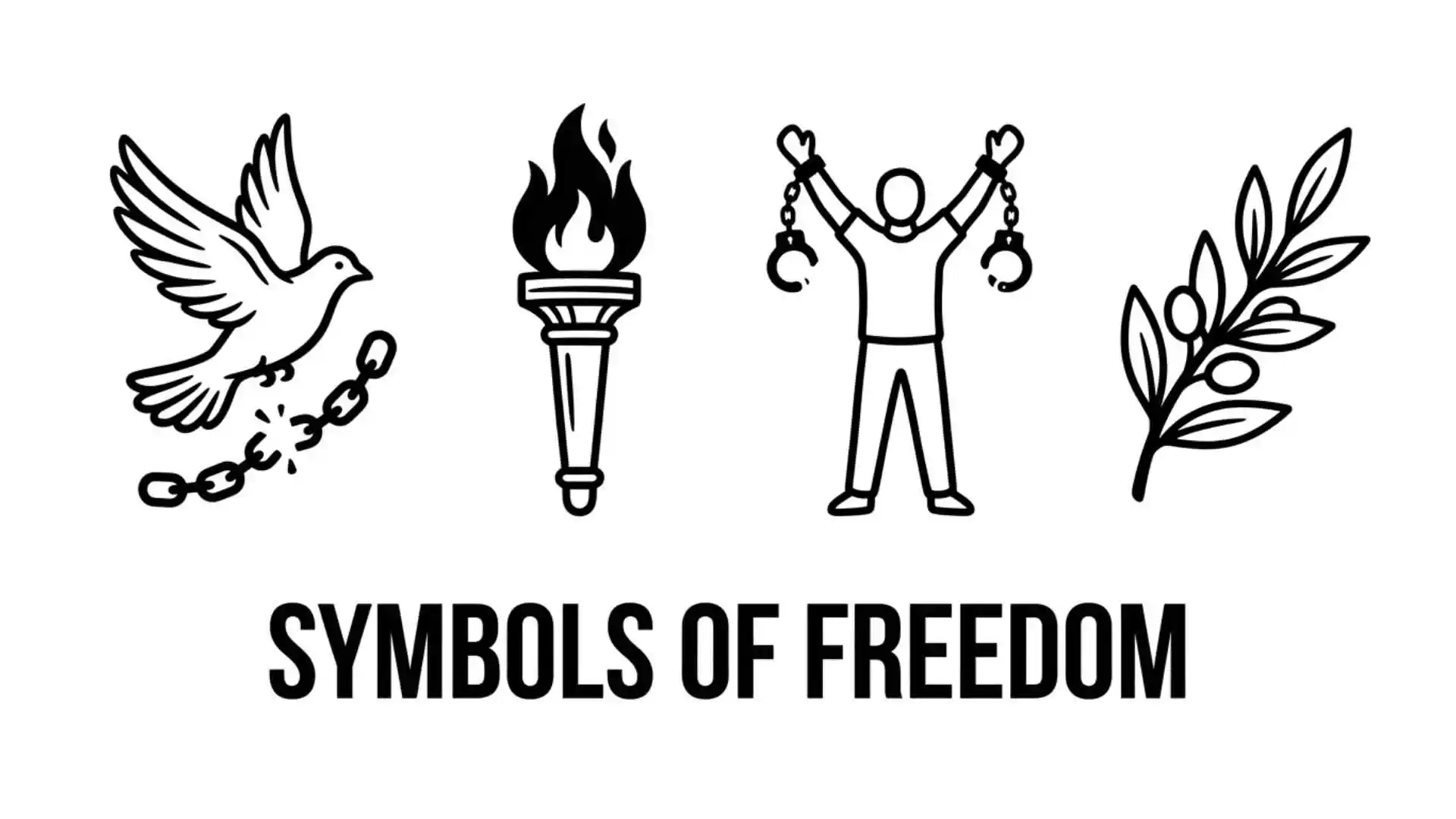
The symbols of freedom are more than cultural icons or artistic expressions. They are emotional signals that awaken something deep within the human spirit.
From a soaring bird in the sky to a broken chain on the ground, these symbols carry stories of struggle, hope, and liberation.
They remind us that freedom is not just a political idea but a lived human experience.
Across time and civilizations, people have turned to symbols when words were not enough.
And even today, these images continue to move hearts, inspire revolutions, and heal generations.
What Symbols of Freedom Really Mean: A Deeper Emotional Lens
At their core, symbols of freedom represent release, possibility, and self-determination. But their meaning goes far beyond definitions.
They often reflect three emotional layers:
- Liberation from oppression
- Inner emotional or spiritual awakening
- Hope for a future without limitation
A symbol becomes powerful when it connects collective memory with personal longing. That is why even a simple image, like an open sky, can feel deeply emotional. It mirrors the human desire to expand beyond boundaries.
Historical Symbols of Freedom That Shaped Civilizations
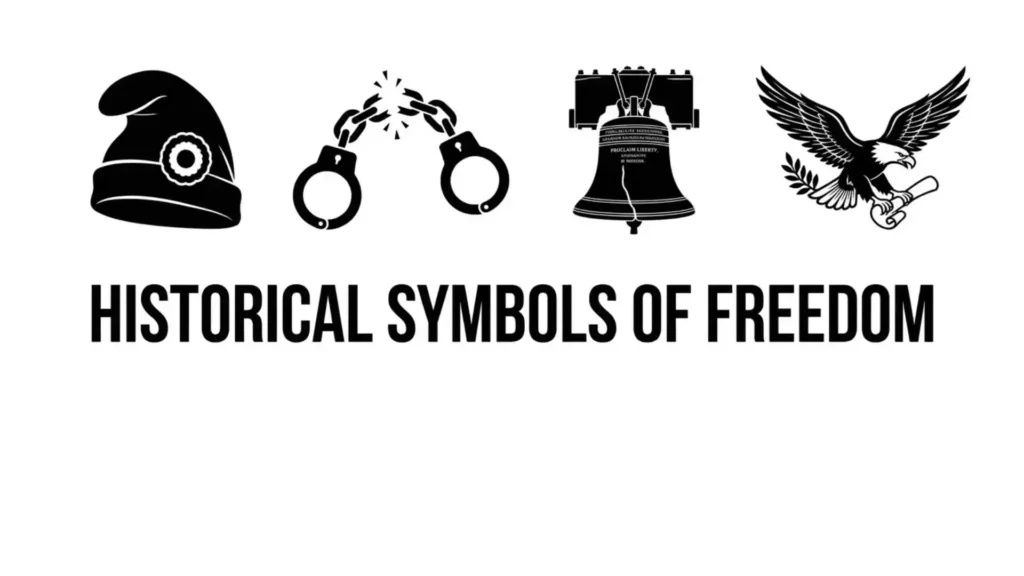
Throughout history, societies have created powerful symbols to represent freedom during revolutions, wars, and cultural shifts.
Broken Chains
One of the most universal symbols of freedom, broken chains represent liberation from slavery, injustice, and control. It is a direct visual metaphor for escape and emancipation.
The Torch of Enlightenment
The torch, often associated with knowledge and enlightenment, symbolizes freedom through awareness. The most famous example is the Statue of Liberty’s torch, representing guidance and hope for immigrants seeking new beginnings.
Flags of Independence
National flags often carry deep emotional weight. They represent sovereignty, identity, and the right of a people to govern themselves.
These symbols did not emerge randomly. They were born during moments when humanity demanded change.
Nature as a Symbol of Freedom: The Language of the Wild
Nature has always been humanity’s most intuitive storyteller of freedom.
Birds in Flight
Birds, especially eagles and doves, symbolize unrestricted movement and liberation from earthly limits. Their flight represents transcendence and spiritual elevation.
The Open Sky
The sky is infinite, unowned, and ever-expanding. It symbolizes mental freedom, imagination, and possibility.
Wind and Rivers
Wind cannot be controlled, and rivers always find their path. Both represent natural freedom, persistence, and adaptability.
Nature reminds us that freedom is not only a human concept but a universal principle.
Cultural Interpretations of Freedom Across the World
Different cultures interpret freedom symbols through their own history and emotional experiences.
America: Liberty and Independence
Freedom is often represented through liberty icons, independence monuments, and national symbols tied to revolution and self-governance.
Europe: Enlightenment and Resistance
European symbolism often connects freedom to intellectual awakening, resistance movements, and artistic expression.
Asia: Balance and Inner Liberation
In many Asian traditions, freedom is not only external but internal, achieved through mindfulness, detachment, and harmony.
Africa: Liberation and Identity
Freedom symbols in African contexts often reflect independence from colonial rule, cultural pride, and ancestral strength.
Across all regions, freedom carries both shared and unique emotional meanings.
Psychological Meaning of Freedom Symbols: Why They Affect Us Deeply
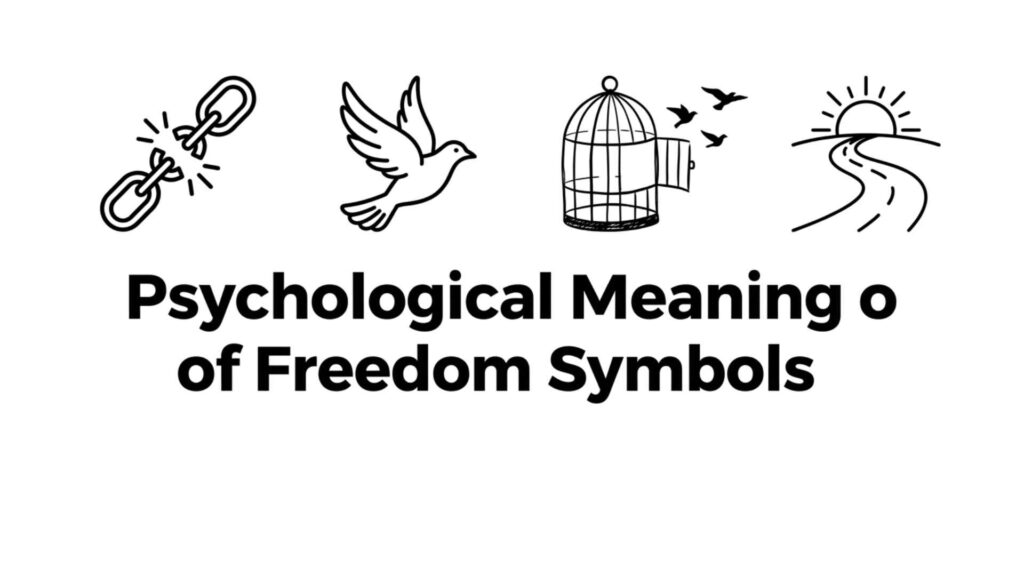
Why do these symbols move us so strongly?
Psychologically, they activate:
- Memory of struggle or limitation
- Desire for autonomy and control
- Hope for transformation
When the brain processes symbols of freedom, it connects them with reward pathways linked to relief and aspiration. That is why images like open doors, soaring wings, or rising light can feel emotionally powerful even without explanation.
They speak directly to the subconscious mind.
Spiritual Symbolism of Freedom: Liberation Beyond the Physical World
In spiritual traditions, freedom is often understood as liberation from ego, fear, or material attachment.
- In Buddhism, freedom means release from suffering and desire
- In Hindu philosophy, it connects to moksha, or liberation from the cycle of rebirth
- In Christian symbolism, freedom often represents salvation and spiritual renewal
Across spiritual systems, freedom is not escape from the world but awakening within it.
It becomes an inner transformation rather than an external condition.
Modern Symbols of Freedom in Today’s World
In the modern era, freedom has taken new symbolic forms shaped by technology, activism, and global culture.
Digital Freedom Icons
Open-source symbols, unlocked padlocks, and encrypted networks represent privacy and autonomy in the digital age.
Social Movements and Gestures
Raised hands, peaceful protests, and unity symbols represent collective voices demanding rights and justice.
Minimalist Art and Expression
Modern art often uses abstract forms to represent emotional and intellectual freedom beyond traditional boundaries.
Freedom today is not only physical. It is informational, emotional, and digital.
Freedom in Art, Literature, and Human Expression
Artists and writers have long used symbolism to express freedom when direct speech was impossible.
- In literature, freedom appears as journeys, open roads, and breaking storms
- In painting, it appears as light breaking through darkness
- In music, it is expressed through rhythm, improvisation, and emotional release
Art becomes a safe space where freedom can exist without restriction. It allows people to feel what they cannot always say.
Did You Know? Emotional Truths About Symbols of Freedom
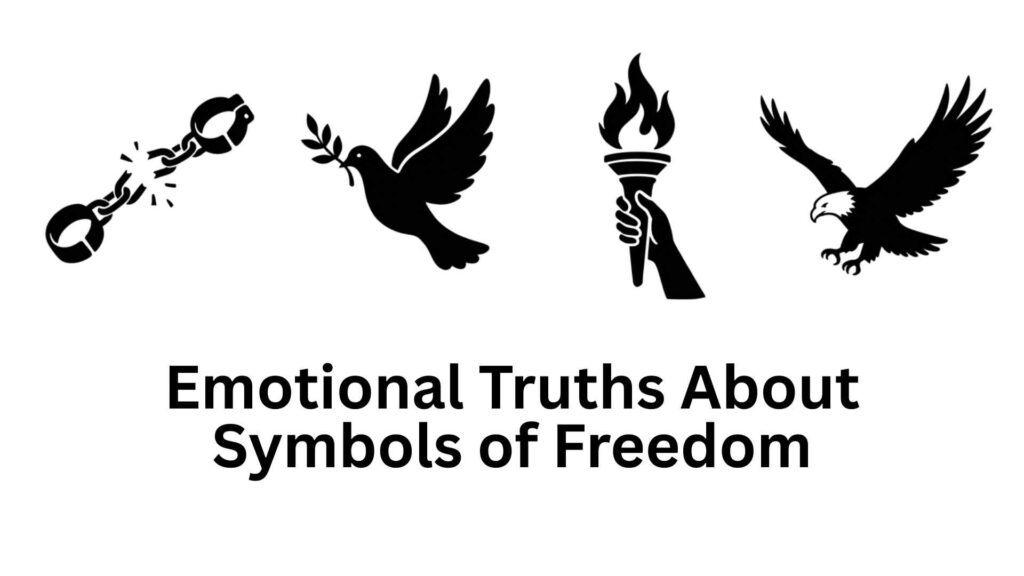
- Many ancient cultures associated birds with the soul’s ability to escape the body
- The image of broken chains became widespread during global abolition movements
- Open doors are one of the most psychologically comforting symbols in human studies
- Blue skies consistently trigger feelings of calm and mental expansion
These details show how deeply freedom is wired into both culture and psychology.
FAQs About Symbols of Freedom
What are the most common symbols of freedom?
Common symbols include birds, broken chains, torches, open skies, and national flags, each representing liberation and independence.
Why do birds symbolize freedom?
Birds represent freedom because they move without physical restriction and symbolize elevation above earthly limitations.
What does a broken chain symbolize?
A broken chain represents liberation from oppression, slavery, or emotional and psychological constraints.
Is the Statue of Liberty a symbol of freedom?
Yes, it symbolizes hope, immigration, and the pursuit of liberty and opportunity, especially in the United States.
How is freedom symbolized in different cultures?
Different cultures represent freedom through independence movements, spiritual liberation, intellectual awakening, or harmony with nature.
What is the spiritual meaning of freedom?
Spiritually, freedom often means liberation from ego, suffering, and attachment, leading to inner peace and enlightenment.
Can freedom be a personal symbol?
Yes, personal symbols like open roads, water, or light can represent individual experiences of growth and emotional release.
Conclusion: Why Symbols of Freedom Still Matter Today
Symbols of freedom are not frozen in history. They continue to evolve with human experience, reflecting our deepest hopes and struggles.
They remind us that freedom is both a personal journey and a shared human dream.
Whether seen in nature, culture, or art, these symbols carry emotional truths that words alone cannot hold.
And perhaps that is their greatest power, they make us feel what it means to be truly alive and unbound.
In a world of constant change, they remain timeless anchors of hope, courage, and possibility.

Michael Brooks is a language and digital culture writer at Meanlio.com. He focuses on explaining modern English meanings, internet slang, texting abbreviations, and social media expressions in a simple and easy-to-understand way.
With a strong interest in online communication and evolving language trends, Michael writes articles that help readers understand how words and phrases are used across platforms like TikTok, Instagram, WhatsApp, Snapchat, and online communities.
At Meanlio, his goal is to make confusing internet language easier for students, English learners, writers, and everyday users through practical explanations and real-life examples.
His content mainly covers:
- Internet slang meanings
- Texting abbreviations
- Social media phrases
- Emotional and trending expressions
- Everyday English explanations
Michael continuously researches online trends and modern communication styles to keep content accurate, updated, and reader-friendly.